Reviewed by the NMLSApproved team
Last updated: August 2026
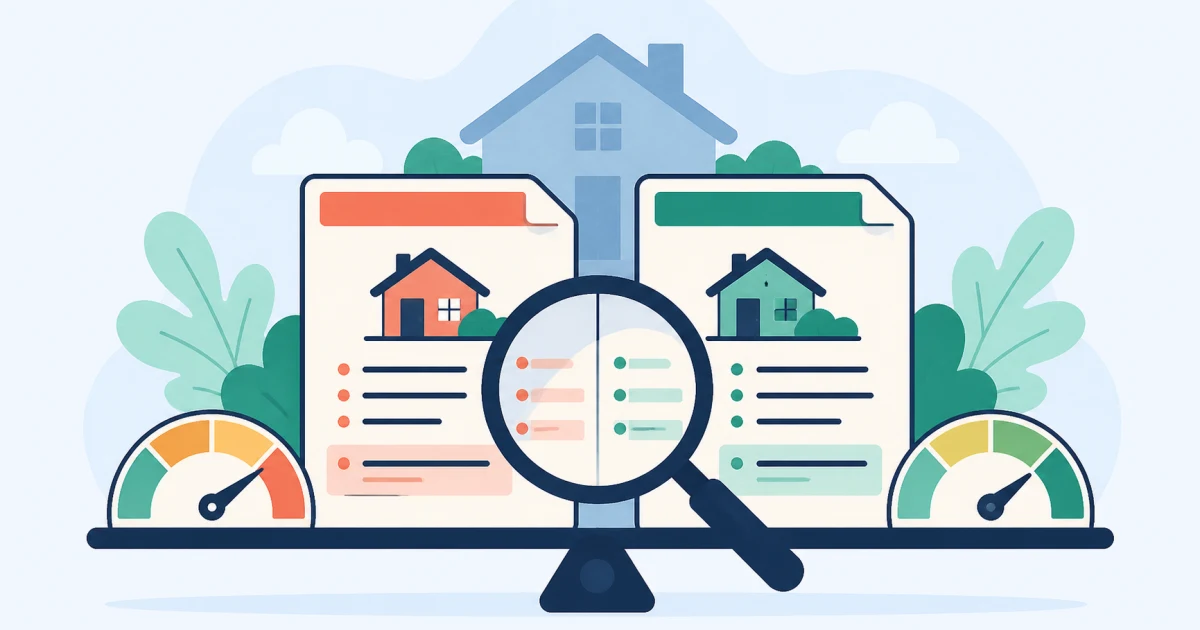
HOEPA and HPML both protect consumers from risky, high-priced mortgage lending—but they are not the same rule. For the NMLS exam, the fastest way to separate them is this: HOEPA identifies a high-cost mortgage and brings the strongest restrictions; HPML identifies a higher-priced mortgage loan and adds pricing-based underwriting, escrow, and appraisal protections.
The common trap is assuming that every loan with a high interest rate is automatically a HOEPA loan. It is not. HOEPA and HPML use different tests, have different triggers, and lead to different compliance duties.
HOEPA vs. HPML at a glance
| Question | HOEPA high-cost mortgage | HPML higher-priced mortgage loan |
|---|---|---|
| Primary rule | TILA / Regulation Z § 1026.32 | Regulation Z § 1026.35 |
| Main idea | Identifies loans with costs or features serious enough to require heightened protections and restrictions. | Identifies loans priced above the market benchmark by the applicable APR-to-APOR margin. |
| Common triggers | APR exceeds APOR by more than 6.5 points for a first lien or 8.5 points for a subordinate lien; points and fees or certain prepayment-penalty conditions can also trigger HOEPA. | APR exceeds APOR by more than 1.5 points for most first liens, 2.5 points for jumbo first liens, or 3.5 points for subordinate liens. |
| Key exam protections | Pre-loan counseling, ability-to-repay review, restrictions on terms and fees, and special disclosures. | Escrow requirements, appraisal rules in certain cases, and underwriting protections for higher-priced loans. |
| Best memory cue | High cost = heavy restrictions. | Higher price = APOR comparison and added safeguards. |
What is HOEPA?
HOEPA is the Home Ownership and Equity Protection Act. In current Regulation Z, it governs high-cost mortgages. A covered loan can become high-cost because of its annual percentage rate (APR), points and fees, or a prepayment-penalty feature that meets the rule’s conditions.
The SAFE exam usually tests the consequences of a high-cost classification rather than asking you to calculate a current dollar threshold. That is useful because the dollar figures and adjustment amounts can change. Learn the trigger categories and the protections they activate; verify current threshold amounts from the official regulation when your work requires them.
What protections and restrictions matter under HOEPA?
Once a loan is a high-cost mortgage, the creditor faces heightened requirements. Common exam concepts include:
- Required counseling. The consumer must obtain counseling from an approved counselor before consummation.
- Ability to repay. The creditor must consider the consumer’s repayment ability; collateral value alone is not enough.
- Restrictions on loan terms. High-cost mortgages face limits on features such as balloon payments, prepayment penalties, and certain fee practices, subject to narrow regulatory exceptions.
- No financing of certain fees. The rule restricts financing points and fees in a high-cost mortgage.
- Special disclosures. Consumers must receive the required high-cost disclosures within the required time frame before consummation.
What is an HPML?
An HPML is a higher-priced mortgage loan. The core comparison is the loan’s APR against the average prime offer rate (APOR) for a comparable transaction. If the APR exceeds APOR by the applicable regulatory margin, the loan can be an HPML.
For NMLS study purposes, remember the relationship rather than relying on an old blog for exact thresholds: first-lien, larger first-lien, and subordinate-lien transactions can have different applicable margins. The test may provide enough facts to tell you the loan exceeds the relevant benchmark. Your task is to recognize HPML and the protections that follow.
What protections matter for an HPML?
HPML rules focus on reducing the risk of unaffordable or improperly valued lending. Depending on the transaction, the exam may test:
- Ability-to-repay underwriting. The creditor must evaluate repayment ability using required, verified information; it cannot base repayment ability only on the property’s value.
- Escrow accounts. HPMLs generally have escrow requirements for taxes and insurance, subject to applicable exemptions and duration rules.
- Appraisal requirements. Certain HPMLs require an appraisal by a certified or licensed appraiser, and some higher-risk situations can require an additional appraisal.
- No prepayment penalty in prohibited circumstances. The rules limit prepayment penalties for covered higher-priced loans.
The biggest HOEPA vs. HPML exam traps
Trap 1: “High interest rate” automatically means HOEPA
Not necessarily. Both tests compare the loan’s APR to APOR—they just use very different margins. HPML is triggered by a relatively small gap: more than 1.5 points over APOR for most first liens, 2.5 points for jumbo first liens, and 3.5 points for subordinate-lien loans. HOEPA needs a much bigger APR gap: more than 6.5 points over APOR for a first lien or more than 8.5 points for a subordinate lien. A loan can clear the HPML bar easily without ever coming close to HOEPA’s APR trigger.
Trap 2: Points and fees only matter for HPML
Points and fees are a key HOEPA trigger category. If the facts emphasize fees, do not jump immediately to APOR. Ask whether the question is testing high-cost-mortgage classification and its restrictions.
Trap 3: Only HOEPA has ability-to-repay rules
Both areas can involve repayment ability, but they test it in different compliance contexts. HOEPA has heightened high-cost protections. HPML underwriting also requires a meaningful repayment analysis and cannot rely solely on collateral value.
Trap 4: HOEPA and HPML can never overlap
They are separate classifications based on separate tests. A loan may satisfy one test without satisfying the other; depending on the facts, a loan may implicate both sets of requirements. Never assume one label automatically rules out the other.
For the larger map of federal mortgage-law terms, start with RESPA vs. TILA vs. TRID. It helps keep the statute, disclosure, and product-protection rules in separate mental buckets.
HOEPA and HPML practice question
Which rule is the question testing?
An MLO is reviewing a closed-end mortgage loan. The loan’s APR exceeds the APOR for a comparable transaction by the applicable regulatory margin. The question asks which additional consumer protections may apply, including escrow and appraisal requirements. Which classification is the best answer?
- A standard purchase-money mortgage with no special Regulation Z protections.
- A HOEPA high-cost mortgage, because every APR above market is high-cost.
- An HPML, because the classification is based on the APR-to-APOR comparison.
- A RESPA Section 8 transaction, because the loan may cost the borrower more.
Show answer and explanation
Why B is tempting but wrong: HOEPA is also a consumer-protection rule for costly loans, but an APR-to-APOR comparison by itself points to HPML. The question would need high-cost triggers or restrictions to make HOEPA the best answer.
Why A and D are wrong: The stated pricing comparison triggers a specialized Regulation Z analysis, and RESPA Section 8 concerns kickbacks and unearned fees—not whether an APR exceeds APOR.
Make the comparison automatic
Practice federal-law questions until you can identify the trigger first, then match it to the correct protection or restriction.
Practice NMLS federal-law questions →Stuck on a HOEPA or HPML rule? Ask Ace, our AI coach — it cites the exact section behind every answer.
How to study HOEPA and HPML without mixing them up
Build a two-column comparison note. On the HOEPA side, write high cost and list APR, points and fees, prepayment penalty, counseling, and restrictions. On the HPML side, write higher price and list APR versus APOR, escrow, appraisals, and underwriting.
Then practice the following decision sequence:
- What benchmark does the question give me? APOR points to HPML. Points and fees may point to HOEPA.
- What protection is being tested? Counseling and strong product prohibitions point to HOEPA. Escrow and appraisal requirements point to HPML.
- Is the question testing a different law entirely? Referral fees suggest RESPA; adverse action suggests ECOA; final-disclosure timing suggests TRID.
- What is the best answer under the facts? Do not select a true statement about HOEPA if the specific facts identify HPML.
Use NMLS practice questions to test that recognition under time pressure. If you miss a comparison question, write the trigger and the protection in an error log before moving on.
FAQ
What is the difference between HOEPA and HPML?
HOEPA governs high-cost mortgages and can be triggered by APR, points and fees, or qualifying prepayment-penalty conditions. HPML identifies higher-priced mortgage loans primarily through an APR-to-APOR comparison. HOEPA is associated with stronger product restrictions; HPML is associated with pricing-based escrow, appraisal, and underwriting protections.
Is every HPML a HOEPA loan?
No. They are separate classifications with separate tests. An APR that exceeds APOR by the applicable margin points to HPML, but that fact alone does not establish that the loan meets a HOEPA high-cost trigger.
What is APOR on the NMLS exam?
APOR means average prime offer rate. In HPML questions, the loan’s APR is compared with the APOR for a comparable transaction. If the loan’s APR exceeds APOR by the applicable margin, HPML rules may apply.
What is the most important HOEPA trigger to remember?
Remember the three categories: APR, points and fees, and certain prepayment-penalty conditions. The exact numeric thresholds and adjustment amounts can change, so focus first on recognizing which category the question describes.
Does HOEPA require housing counseling?
Yes. A consumer must obtain counseling from an approved counselor before consummation of a HOEPA high-cost mortgage. On the exam, required counseling is a strong HOEPA clue.
Do HPMLs have escrow requirements?
HPML rules generally require escrow for taxes and insurance, subject to applicable exemptions and duration rules. If an exam scenario highlights an APR-to-APOR comparison plus escrow, HPML is usually the intended concept.
The one-line comparison to remember
HOEPA asks, “Is this mortgage high-cost enough to trigger strict restrictions?” HPML asks, “Is this loan priced high enough above APOR to trigger added safeguards?”
Start with that distinction, then practice the details. Take NMLS federal-law questions and use Ace, our AI coach when you want the exact regulatory rule behind an answer.
For the source rules, refer to the CFPB’s official high-cost mortgage rule, Regulation Z § 1026.32 and higher-priced mortgage-loan rule, Regulation Z § 1026.35.


Comments (0)
Leave a comment
Please log in to join the discussion.
Log in to comment